
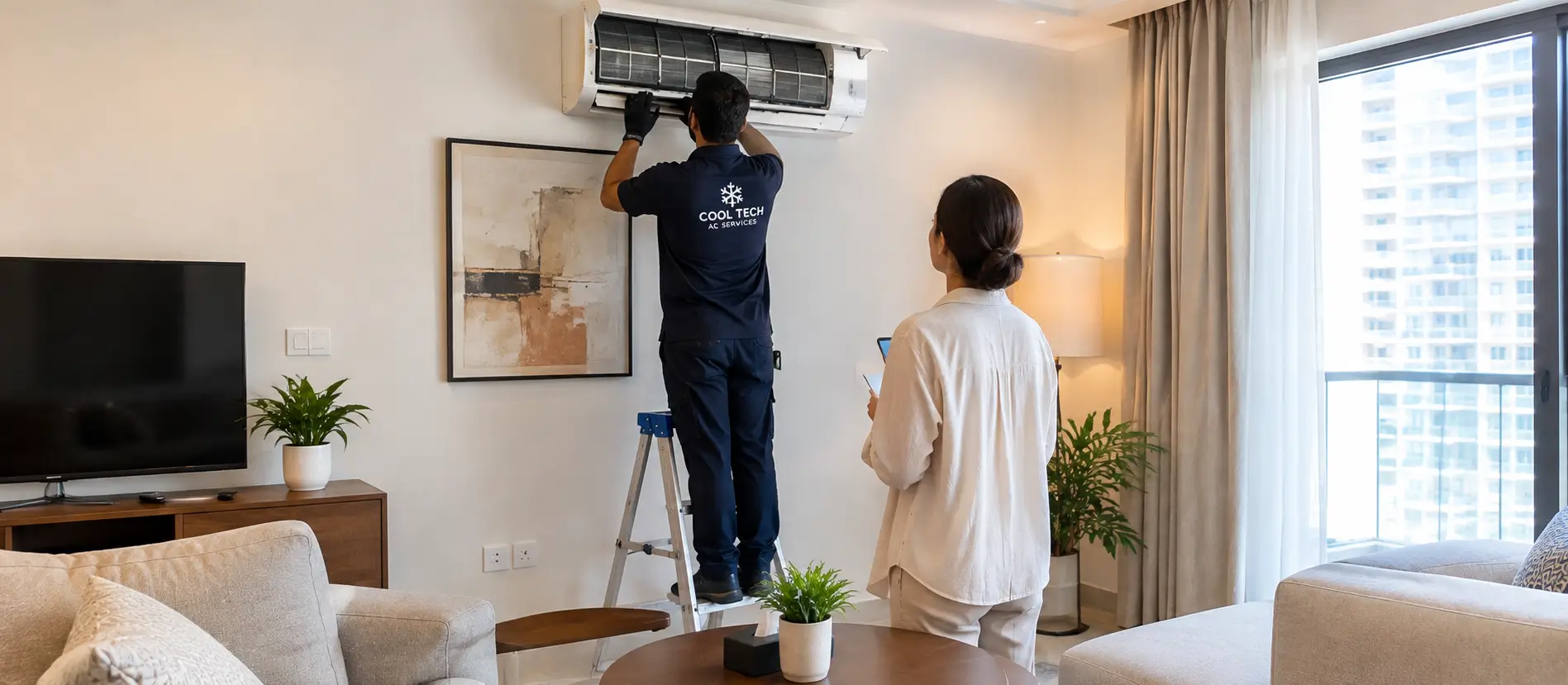
Under Dubai rental law, the landlord is responsible for AC repairs and major maintenance unless the tenancy contract says otherwise. Tenants are usually responsible for routine upkeep, such as cleaning filters, and must pay for damage they cause. Many contracts move minor repairs below a set amount to the tenant, so your contract is the first thing to check.
Key takeaways
- The landlord pays for AC repairs caused by normal use, unless the contract says otherwise.
- The tenant usually handles routine upkeep and pays for damage from misuse or neglect.
- A minor-maintenance clause can shift small repairs to the tenant, up to a set amount.
- Report AC faults in writing straight away, and keep photos and technician reports.
When the AC stops cooling in the middle of a Dubai summer, the first question after "how fast can it be fixed?" is usually "who pays?". The answer depends on two things: Dubai's rental law and the wording of your tenancy contract. At AH Technical we service and repair AC units in rented homes every week, for tenants, landlords and property managers. This guide explains who is responsible for AC maintenance, tenant or landlord, in Dubai, and how the cost is usually split.
What Dubai law says about AC maintenance
Rentals in Dubai are governed by Law No. 26 of 2007, as amended by Law No. 33 of 2008. Three articles matter most for AC units:
- Article 16: unless the parties agree otherwise, the landlord must maintain the property and carry out the repairs needed to keep it fit for use during the lease.
- Article 19: the tenant must look after the property as a careful person would look after their own.
- Article 21: at the end of the lease, the tenant returns the property in the condition it was received, apart from ordinary wear and tear.
In practice this means an AC that breaks down through normal use is the landlord's cost, while an AC that is damaged by misuse or neglect is the tenant's.
Who usually pays for what
The table shows how AC costs are commonly split in Dubai rentals. Your contract can change some of these.
| AC task | Usually paid by | Why |
|---|---|---|
| Cleaning or changing filters | Tenant | Routine upkeep that comes with day-to-day use. |
| Routine service (coil, drain, check-up) | Depends on contract | Many contracts give this to the tenant. If the contract is silent, ask the landlord. |
| Repair after normal use (compressor, fan motor, gas leak) | Landlord | Article 16 makes repairs the landlord’s duty unless agreed otherwise. |
| Small repair below the contract limit | Tenant, if the contract says so | A minor-maintenance clause can shift small repairs, such as those under AED 500. |
| Damage from misuse or neglect | Tenant | Damage beyond normal wear and tear is the tenant’s cost. |
| Central chiller or building plant | Landlord or building | Major building systems stay with the owner. |
| Replacing a unit at the end of its life | Landlord | Replacement is a major cost, not upkeep. |
Check your tenancy contract first
Most Dubai tenancy contracts include a maintenance clause. A common version makes the tenant responsible for minor repairs up to a set amount per repair, often AED 500 to AED 1,000, and the landlord for anything above it. Some contracts also require the tenant to have the AC serviced once or twice a year.
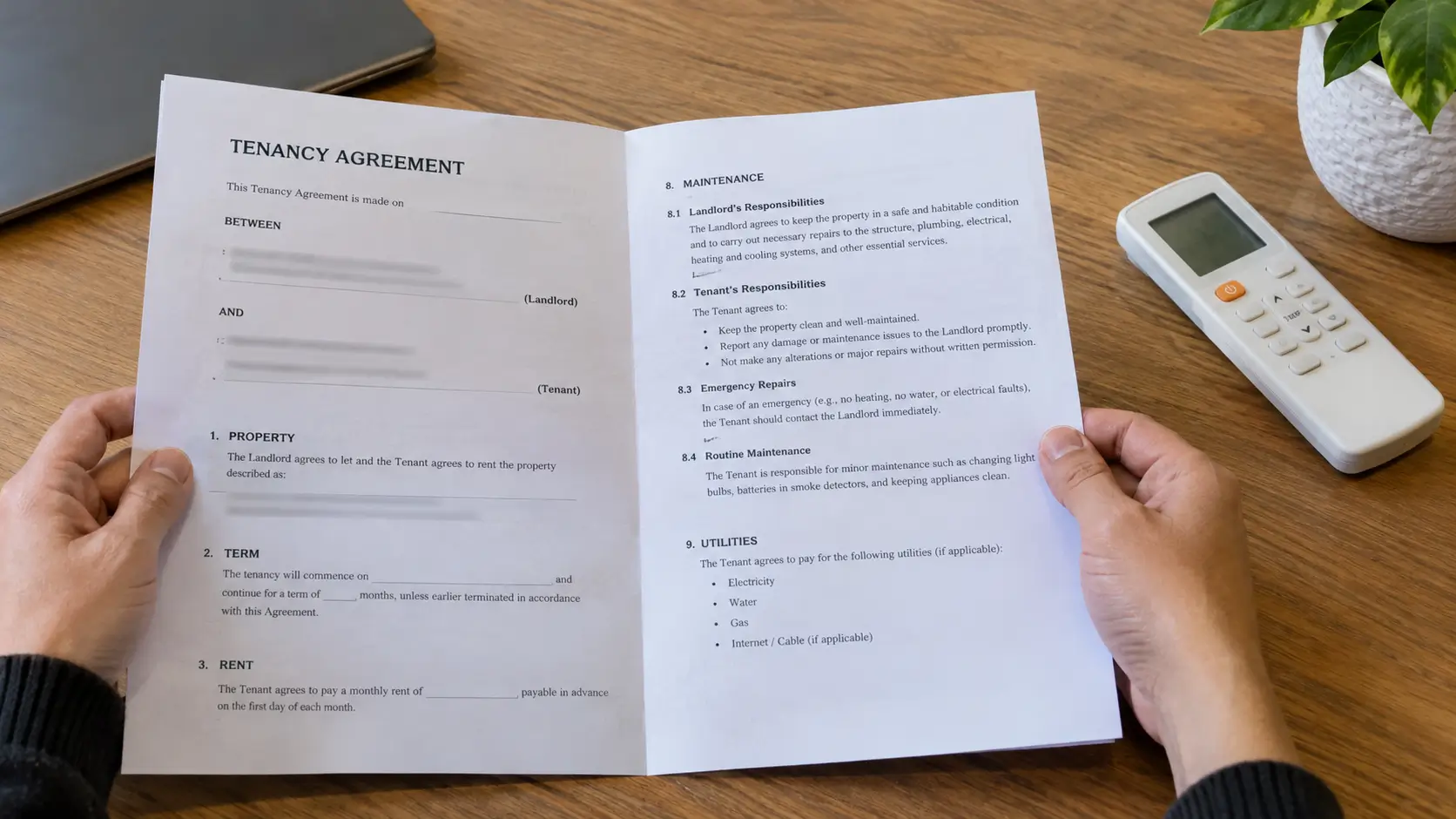
These clauses are generally enforced when the contract is registered on Ejari. There are limits, though. A clause that makes the tenant replace a failed central system, or caps the landlord's total repair spend at a very low figure, may not be upheld by the Rental Dispute Settlement Centre, because the property must stay fit to live in.
Chiller-free or district cooling: who pays the cooling bill?
Cooling bills are separate from maintenance. In a chiller-free building the landlord pays for the cooling, and it is built into the rent. In a district cooling building the tenant usually gets a separate bill from the cooling provider, with a usage charge and often a fixed capacity charge. Neither arrangement changes who maintains the indoor unit in your flat; that still comes down to the contract.
What to do when your AC breaks down
- Tell the landlord or agent in writing. Email or WhatsApp gives you a dated record.
- Add photos or a short video. Show the fault, such as water dripping or a unit blowing warm air.
- Do not ignore leaks. If a small leak becomes water damage because it was not reported, the extra cost can fall on you.
- Keep the technician's report. A written note of the cause helps settle who pays.
- Escalate if needed. If the landlord does not respond within a reasonable time, you can file a case with the Rental Dispute Settlement Centre. Avoid withholding rent, as that can work against you.
Keep the AC serviced, whoever pays
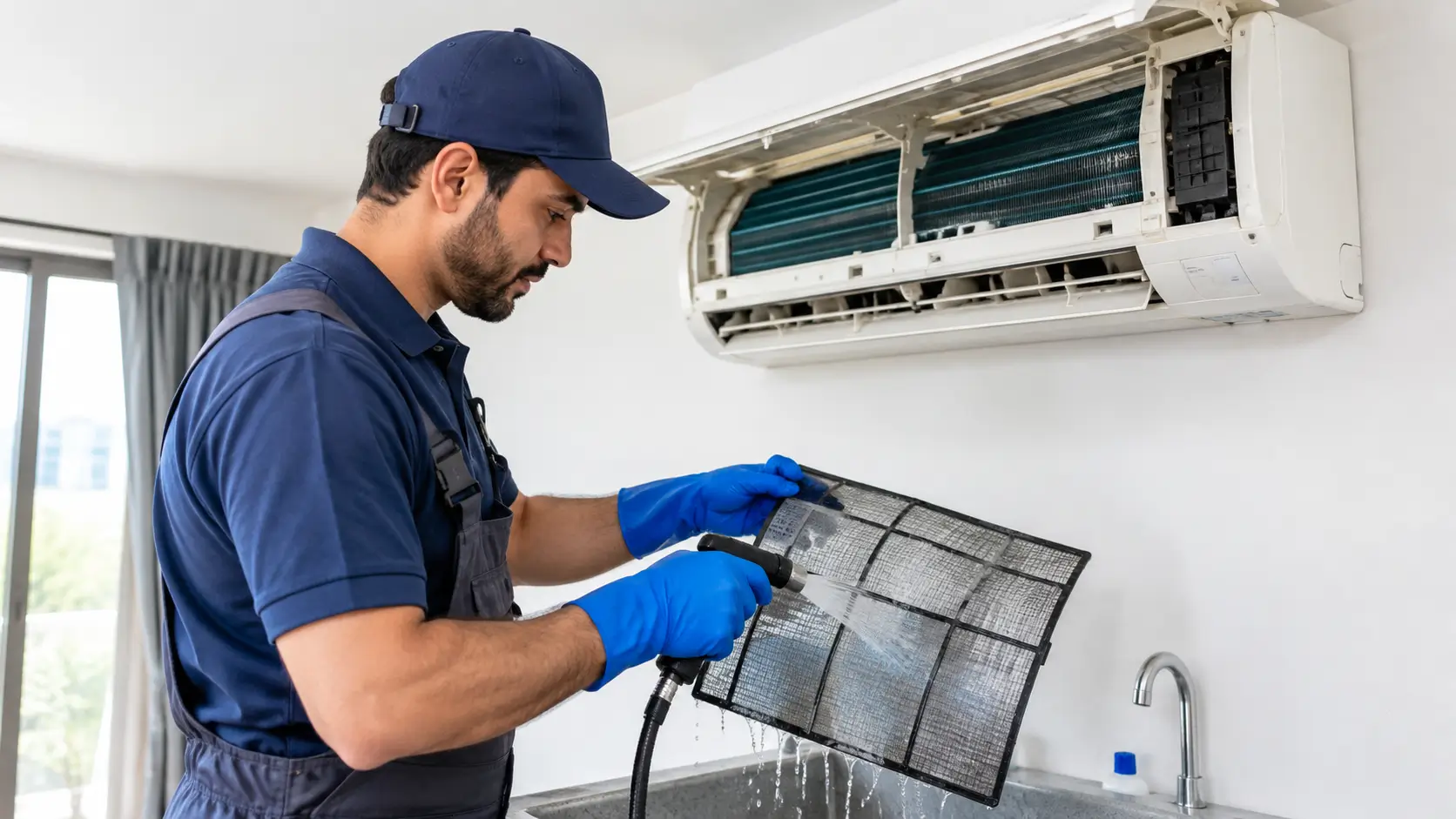
Regular servicing is the cheapest way to avoid an argument over a breakdown. A clean filter, coil and drain line keep the unit cooling and stop most leaks before they start. If you are budgeting for it, see what a routine AC service costs in Dubai.
Whether you are the tenant or the landlord, our AC repair and servicing team follows the same steps on every visit:
- Call or WhatsAppTell us the number of units and what is wrong.
- On-site checkA technician inspects each unit and gives you a fixed price.
- Work gets doneWe service or repair the units and leave the area clean.
- Written reportYou get a short report of the cause, useful for tenant and landlord.
AC maintenance FAQs
Who is responsible for AC maintenance, tenant or landlord, in Dubai?
By default the landlord is responsible for AC repairs and major maintenance under Article 16 of Law No. 26 of 2007. The tenant handles routine upkeep such as filter cleaning, and the contract can shift minor repairs to the tenant.
Can my landlord make me pay for AC repairs?
Only if your tenancy contract says so, for example through a minor-maintenance clause, or if the damage was caused by misuse or neglect. Repairs from normal use are otherwise the landlord’s cost.
Who pays for AC duct cleaning in a Dubai rental?
It depends on the contract. Many contracts treat duct cleaning as periodic maintenance for the tenant, while others leave it with the landlord. If the contract is silent, agree it in writing before booking.
What can I do if my landlord will not fix the AC?
Send a written request with photos and keep a record of the dates. If the landlord still does not act, you can file a case with the Rental Dispute Settlement Centre at the Dubai Land Department.
Where we work in Dubai
Our office is in Al Satwa, Bur Dubai, and our AC technicians work for tenants, landlords and property managers across the city, including:
- Bur Dubai
- Al Satwa
- Downtown Dubai
- Business Bay
- Dubai Marina
- JLT
- JVC
- Al Barsha
- Al Quoz
- Jumeirah
- Palm Jumeirah
- DIFC
- Discovery Gardens
- Mirdif
AC not cooling in your rented home?
Tell us the number of units and what is wrong, and contact us for a fixed price and a written report you can share with your landlord or tenant.